

















Cat Behavior After a Fight: Signs to Watch for and How to Help

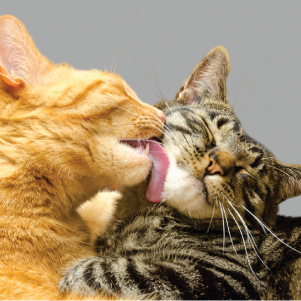
Domestic cats are independent by nature, but that doesn’t mean they don’t like human or feline companionship. Cats can live harmoniously together and, indeed, become the best of buddies – as long as they are in the same social group. If you see your cats grooming or rubbing against each other and sleeping with their bodies touching, you can be confident that they are in the same social group and they have bonded.
But no matter how friendly your cats are, they will still want their own space and separate resources (food bowls, litter boxes, scratching posts, safe spots, etc.) if you are to maintain kitty harmony!
Regardless of your cats’ relationship, the right support can help your cats get along perfectly, including FELIWAY® Optimum, which helps cats feel more serene and comfortable in various stressful situations, including inter-cat conflict.
If your cats have recently fought, you may be wondering what to do next. After a cat fight, it is important to give both cats time to calm down, check for any signs of injury, and avoid immediately forcing them back together.
With the right approach, cats can learn to live peacefully together again. This guide will explain what to do after your cats fight, how to help a scared or stressed cat recover, and how to reintroduce cats after a fight.
Signs to Watch For and How to Help
It can be difficult to tell the difference between playing and fighting! They often look the same, but there are subtle differences that you need to be able to spot, to know whether you should allow your cats to carry on or if you should intervene. It’s all in the body language.
Characteristics of cats playing
If your cats are having a fun time playing:
-
Their bodies will be relaxed with their ears pointing forward
-
Their claws will be retracted
-
Biting is soft and gentle with no injury to the skin
-
They take it in turn to chase, stalk or pounce on each other
-
They might take a little break to get into a different position and start all over again.
It’s normal for playing cats to return to normal when it’s just fun. But if they start to hide or avoid each other, that’s a sign there may be conflict involved.
Characteristics of cats fighting
However, if they are in conflict:
-
Their bodies will be tense with flat ears and you may see a low swishing tail
-
They may have a sideways stance and puff up their bodies to make themselves appear bigger
-
Their claws are likely to be out when they swipe
-
You are more likely to hear them growling or hissing
-
One cat is usually initiating the fight, or looking to continue
-
After a fight, the cats often do not immediately return to their normal behavior and you may see actions such as quick grooming of their coat or hiding away.
Signs to watch for
Cats generally don’t like physical conflict and you can look for other subtle signs that they are not completely comfortable in each other's company, as well signs that tension between them may be causing stress.
Watch for:
Staring and blocking
Staring is a threatening gesture between cats, which can sometimes be easily missed. Another more subtle sign is when one cat blocks access to a resource or passageway by physically being in or near a specific spot. This might look like your cat is simply resting in one place, but to your other cat, it can prevent them from passing by or accessing important resources such as their food bowl or litter tray.
Swiping and hissing
Escalating a little, cats in conflict that are close by might have one paw off the ground, extended, with claws out ready to defend themselves or to tap the other cat. Listen for sounds that suggest a fight might be brewing, such as, as hissing and growling.
Stress-related signs
Cats experiencing conflict might show signs that they are feeling stressed, such as overgrooming, urine spraying, or hiding away more often.
If your cats have progressed beyond subtle signs to actual physical fighting, you should not try to physically separate them with your hands, as you could be scratched or bitten. Instead, try to interrupt the fight safely from a distance and allow the cats to separate.

What should I do after my cats fight?
To break up a cat fight, your priority should be to make sure both cats are safe and give them time to calm down. Even if your cats normally get along, avoid immediately putting them back together after a fight.
There are several steps you can take to help your cats recover and reduce the likelihood of further conflict:
Separate the cats safely
Give each cat their own quiet, secure area where they can spend some time alone. Make sure they have access to essential resources such as food, water, litter trays, scratching post, and a comfortable place to rest.
Avoid picking up or physically handling a frightened or agitated cat unless necessary, as they may accidently scratch or bite you when they feel threatened.
Check your cats for injuries
Once your cats have calmed down, check them carefully for signs of injury. Look for bleeding, swelling, limping, tenderness, or changes in normal movement or behavior.
Cat bite wounds can sometimes be difficult to spot, particularly beneath thick fur. If you suspect your cat has been bitten or injured during a fight, contact your vet for advice.
Give your cats time to calm down
A cat may hide, avoid the other cat, or seem more nervous than usual after a fight.
Ideally, each cat should spend some time alone in their own safe space to allow them to calm down before coming back into contact with each other. Around 24 hours or more, depending on the cats, is a good place to start.
Don't force them back together
Even if your cats previously lived happily together, don't rush to reunite them. Wait until both cats are calm before beginning a gradual reintroduction.
When should I take my cat to the vet after a fight?
If your cat has any visible injuries, such as bleeding, swelling, limping or wounds, contact your vet for advice. You should also speak to your vet if you suspect they have been bitten, even if you cannot see an obvious injury.
A sudden change in behavior can sometimes have an underlying medical cause. If cats that previously got along suddenly begin fighting, a veterinary check is also important to rule out health problems that may be affecting how they interact with each other.
What should I do if my cat is scared after a fight?
If your cat is scared after a fight, give them time and space to recover. Don't force them out of hiding or immediately try to reunite them with the other cat.
Make sure they have access to a quiet, secure space where they can retreat, as well as food, water, scratching post, and a litter tray. Keep their routine as predictable as possible and allow them to approach you in their own time.
If your cat remains unusually fearful or you notice other significant changes in their behavior, consult your vet for advice. A qualified behaviorist can also provide support if your cats continue to show signs of conflict or struggle to adjust.
How to help your cats live happily together
Try to understand the reason for the conflict. If your cats have previously got on well together, there could be a variety of reasons for the sudden change in behavior.
Perhaps they have been away from home for a while; did they stray from home for a few nights? Have they been hospitalized for a while? When they return home, their communal scent will be different; a cat’s sense of smell is incredibly important to them as they use it to gather information about their surroundings, and if this has changed while they were ‘away’ it could unsettle them.
If you are introducing a kitten, or an older cat, to your resident cat, you should not expect them to bond immediately. All cats are individuals and will adapt at their own pace. As such, some cats will quickly become best buddies, others might choose to tolerate each other - and others may never get on, even with support.

6 steps to help your cats get along
-
Prepare for the introduction in good time before your cats meet each other:
-
Swap scents between cats before the new kitten/cat arrives.
-
Let them see each other from a distance first and supervise their first face-to-face encounter.
-
Stay calm and never shout at them if there are any signs of hissing or conflict. This will only scare them and they will be reluctant to try again. Just remove both cats from the situation and try again another time when they are both calm.
-
Once your cats are away from each other, have plenty of treats to hand and reward them for staying calm. Happy Snack by FELIWAY® can be used as a treat to help create positive associations during calm moments.
-
Remember that introductions can take time and depend on how well each cat copes. Only progress with the steps when both cats are comfortable - it’s ok to stop and go back a step when you need to!
-
FELIWAY® Optimum can be used as part of a wider approach to supporting cats during stressful situations. Its reassuring messages of enhanced serenity can help create a more harmonious environment while cats recover from conflict and gradually adjust to being around each other again.
-
Make sure there are enough resources (food bowls, litter trays, scratching posts, beds, etc.) – one for each cat and one to spare so that each cat can choose to use a resource independently.
-
Make sure the resources are in quiet, accessible areas, distributed around the house so that each cat can access them separately.
-
Plenty of climbing places are essential, so that they choose where they want to climb and hide if necessary. Cats love hiding in cardboard boxes and jumping onto shelves or tops of cupboards, but they may be put off using these spaces if, for example, the other cat’s bed is in the way. Make sure that they have easy access to all areas.
-
Interact with your cats individually so that there is no conflict for your attention. You will have plenty of love to go round!
-
Learn how to gradually reintroduce your cats using a stepped approach, helping them feel comfortable and rebuild positive associations with each other.
Can cats get along again after a fight?
Yes, cats can get along again after fighting. However, every cat is different, and there is no set timeframe for cats to feel comfortable together again.
Some cats may settle relatively quickly, while others may need a much slower reintroduction. The aim does not necessarily have to be for your cats to become best friends. A successful outcome may simply be that they can share the same home peacefully without ongoing conflict.
The most important thing is not to rush the process. Watch each cat's body language and only progress when both cats appear comfortable. If your cats continue to show signs of conflict or struggle to adjust, consult your vet or a qualified behaviourist for further advice.
How can I prevent my cats from fighting again?
Once your cats are getting along again, continue to watch for early signs of tension. Staring, blocking access to resources, hissing, swiping, hiding or avoiding one another can all indicate that a cat is uncomfortable.
Make sure each cat has access to resources, safe spaces and places to retreat. If you identified a particular trigger for the original fight, address it where possible to reduce the likelihood of future conflict.
With patience and the right support, many cats can learn to live peacefully together again after a fight. Giving them time to recover, providing separate resources and taking reintroduction slowly can all help to rebuild a sense of security and harmony at home.
If your cats are experiencing tension or conflict, FELIWAY® can help support a calmer, more reassuring environment. Discover how FELIWAY® Optimum can help your cats feel more comfortable and support harmony in your home.
If you’d like to learn more about managing conflict between cats and how to create a more harmonious home, explore the FELIWAY® blog for expert advice and practical tips. Don’t forget to sign up to our newsletter for the latest guidance, advice and updates delivered straight to your inbox.